Views: 0 Author: Site Editor Publish Time: 2026-08-31 Origin: Site
Solvent-free lamination is often discussed in terms of coating technology, adhesive chemistry and machine speed.
But one component between the adhesive supply system and the coating section is receiving increasing attention:
the heated adhesive hose.
At first glance, a hose may appear to be only a flexible connection.
In reality, it can influence the condition of the polyurethane adhesive before the material reaches the metering, mixing or coating unit.
As laminating equipment becomes faster and production tolerances become tighter, controlling the adhesive only inside the tank is no longer enough.
The complete material path matters.
A polyurethane adhesive may leave the supply or conditioning unit at the correct temperature.
But it still has to travel through:
Pumps
Metering components
Flexible hoses
Mixing sections
Connection blocks
During this transfer, heat can be lost to the surrounding environment.
As temperature changes, viscosity may change as well.
This can influence:
Pump resistance
Pressure response
Metering behavior
Material delivery speed
Mixing stability
Coating consistency
That is why heated hoses are increasingly treated as part of the adhesive-management system rather than as ordinary spare parts.
High-output flexible packaging production depends on repeatability.
When a laminating line operates continuously, small variations in adhesive delivery can accumulate over a long production run.
A minor viscosity change may not immediately stop the machine.
But it can contribute to:
Increased operator adjustment
Unstable feed pressure
Slower process stabilization
Variation between production batches
As equipment speed increases, the material-delivery system must also respond more consistently.
A temperature-controlled hose helps remove one potential source of variation.
Many solvent-free laminating systems use two polyurethane components.
Before mixing, the two materials may travel through separate lines.
This creates an additional challenge.
If one hose loses more heat than the other, Component A and Component B may arrive at the metering or mixing section under different viscosity conditions.
The pumps may still be operating correctly, but the materials themselves are no longer behaving identically.
A heated hose can help maintain a more stable thermal condition in each line.
This supports a more controlled environment before the two components are combined.
A common misunderstanding about heated hoses is that higher temperature always means better performance.
It does not.
The real purpose is to maintain the adhesive within its recommended processing window.
If the hose temperature is too low:
Viscosity may rise
Pressure may increase
Flow may become slower
If the material is overheated for too long, that may also be undesirable depending on the adhesive chemistry.
The correct approach is:
stable temperature → stable viscosity → predictable material delivery
This is a process-control issue, not simply a heating issue.
A hose may show the correct temperature at the sensor while still containing a colder section elsewhere.
This can happen near:
Fittings
Hose ends
Areas exposed to airflow
Poorly insulated sections
Long unsupported hose runs
For high-viscosity adhesive, one local cold spot may be enough to influence flow behavior.
This is why heating-element distribution matters.
Jingcheng heated hoses use heating elements arranged along the hose body to reduce large temperature differences and help maintain a more continuous thermal path.
The first production minutes after a machine stop can be particularly sensitive.
During downtime, adhesive inside the hose remains stationary.
Even if the main adhesive unit stays warm, the hose can cool faster because it has more surface area exposed to ambient air.
When production restarts, colder material may require:
More pump force
Longer warm-up time
Additional operator adjustment
A heated hose can help keep the flexible transfer section closer to the intended working temperature during standby.
This may support faster stabilization when production resumes.
For maintenance teams, replacing a solvent-free laminating hose is not simply a matter of measuring length and diameter.
A heated hose can also include:
Heating element
Temperature sensor
Electrical plug
Wiring
Special fittings
Insulation structure
A replacement may fit the machine mechanically but still be incompatible with the control system.
Before producing a replacement, the following should be confirmed:
Voltage
Heating power
Sensor type
Electrical connector
Pin assignment
Inlet and outlet fittings
This is particularly important for imported laminating machines.
Different solvent-free laminating platforms can use different mechanical and electrical designs.
Even machines performing the same basic process may use different:
Thread standards
Hose lengths
Connection orientations
Sensor specifications
Cable connectors
For this reason, customized production is often more practical than trying to use one universal hose.
An original hose, technical drawing or clear set of photographs can often provide enough information for preliminary matching.
The value of a heated hose is not limited to material temperature.
Its flexibility can also help equipment manufacturers connect:
Metering unit to mixing head
Adhesive supply unit to coating section
Fixed and movable modules
Components positioned at different heights
Compared with rigid heated piping, a flexible hose can make assembly and maintenance easier.
This is especially useful in compact laminating machines where space around pumps, valves and coating units is limited.
A solvent-free laminating line can be viewed as a continuous material-control chain:
Adhesive Supply → Temperature Conditioning → Metering → Heated Hose → Mixing → Coating
If any section of this chain changes the material condition, downstream performance may also change.
That is why the heated hose should not be treated as an isolated accessory.
It is one part of the process that helps preserve the condition created upstream.
Heated adhesive hoses for solvent-free lamination can be used in:
Flexible packaging laminating machines
Solventless laminators
Two-component polyurethane systems
Adhesive metering equipment
Mixing units
Composite-film production
Coating machinery
OEM laminating equipment
Replacement projects for imported machines
For a more accurate hose configuration, customers should provide:
Adhesive type
Component A / Component B information
Recommended operating temperature
Working pressure
Maximum pressure
Material viscosity
Required flow rate
Hose length
Inner diameter
Voltage
Heating power
Temperature sensor
End fittings
Electrical connector
Machine brand and model
If the full technical information is unavailable, photographs or an original hose can also be used as a reference for preliminary evaluation.
As solvent-free lamination continues to demand higher productivity and better process consistency, controlling the adhesive only inside the supply unit is no longer sufficient.
The flexible hose connecting different machine sections can directly influence the temperature and viscosity of the adhesive before it reaches the metering, mixing or coating process.
A properly designed heated adhesive hose helps maintain a more stable material condition across the complete transfer path.
For laminating equipment manufacturers and maintenance teams, this means the hose is becoming less of a simple spare part and more of a process-control component.
Soren Miles
Marketing Manager | JC
Mobile: +86 13087118553
Phone: +1 (757) 733-8947
Email: soren.miles@shenzhenjingcheng.com
Company (Canada): JINCHEN ELECTRIC TRACING CO., LTD.
Company (Hong Kong, China): HK JINGCHENG HIGH TECH CO., Ltd
Company (China): SHENZHEN JINGCHENG HIGH TECH CO., Ltd
Jingcheng Fluoroplastic (Guangdong) Co., Ltd.
Website: https://www.electricallyheatedhose.com
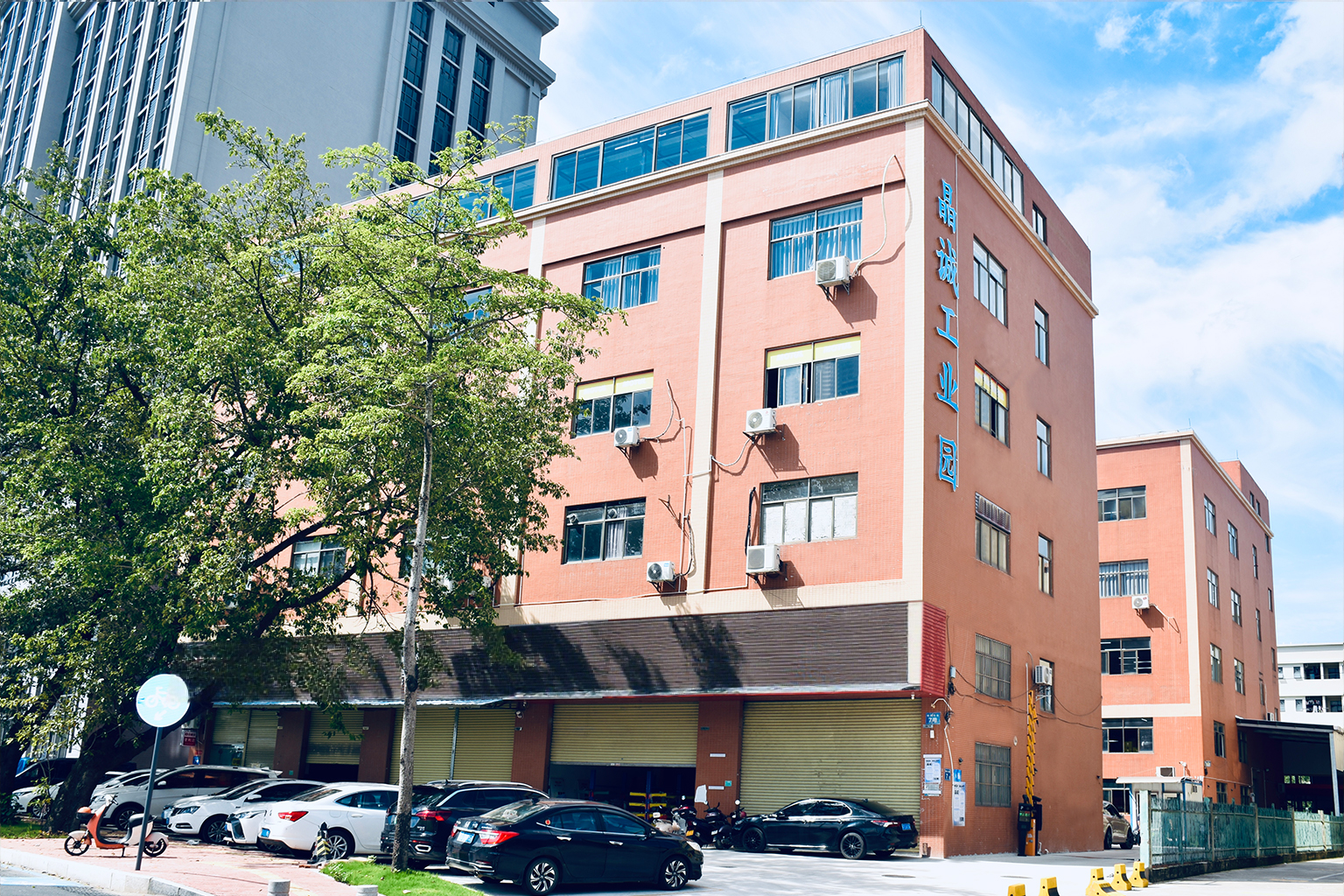
Factory Address: No. 7 Qiguan East Road, Torch Development Zone, Zhongshan City, China — Jingcheng Industrial Park