
Views: 0 Author: Site Editor Publish Time: 2026-04-10 Origin: Site
01 What is a liquid cooling pipeline
Liquid Cooling pipelines (Liquid Cooling Pipeline or Liquid Cooling Loop) are widely used in data centers, high-performance computing, and consumer electronics, among other fields. It conveys coolant through pipes, circulates within the equipment, absorbs the heat generated by the equipment, and conducts the heat to cooling devices such as radiators or cooling towers. Liquid cooling pipelines are typically composed of coolant, pipes, pumps, radiators, joints and valves, as well as coolant storage tanks. Pumps drive the coolant to circulate, ensuring that the equipment is always in a stable temperature control state, providing a more efficient heat dissipation solution and reducing the risk of equipment overheating.
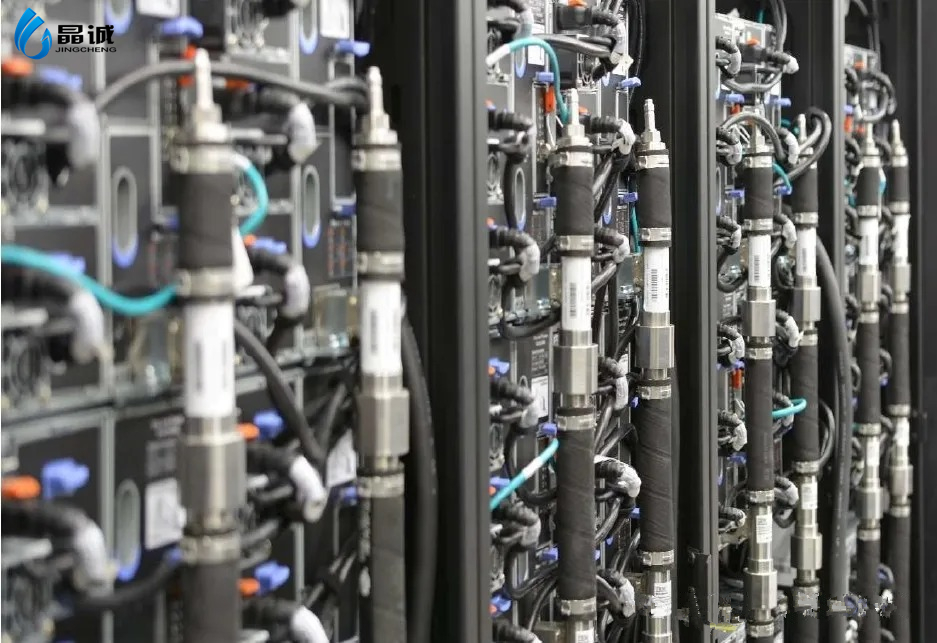
When choosing liquid cooling pipelines inside data center equipment, multiple key factors need to be comprehensively considered to ensure the efficient and stable operation of the system. This includes but is not limited to the compatibility between materials to ensure the harmonious coexistence of pipelines and the working environment; Control the flow velocity within a reasonable range, especially in flexible pipelines, the flow velocity should be maintained below 1.5 meters per second to reduce pressure loss and vibration. Carefully plan the layout of the pipelines to optimize space utilization and reduce resistance caused by bending. Determine the appropriate installation method to facilitate maintenance and upgrades; Precisely design the flow distribution to ensure that all components receive balanced cooling. And ensure the reliability of the pipeline to cope with various challenges during long-term operation.
02 Material selection for liquid cooling pipelines
Metallic Liquid Cooling Pipeline: Made of metal materials such as copper, stainless steel, and aluminum, it features excellent thermal conductivity and mechanical strength, and is often used in scenarios that require high thermal conductivity and high pressure resistance. Plastic Liquid Cooling Pipeline: Made of plastic materials such as PE, PVC, PTFE, and FEP, it features good chemical resistance, flexibility, and low cost, making it suitable for the cooling requirements of general industrial and electronic equipment. Rubber Liquid Cooling Pipeline: Made of materials such as silicone and fluororubber, it features excellent flexibility and high-temperature resistance, and is often used in liquid cooling systems that require bending and vibration resistance. Silicone (SIL) is an elastic material with excellent high-temperature resistance and corrosion resistance. In liquid cooling systems, silicone rubber hoses have high compressive strength and tensile resistance, making them suitable for various high-pressure and high-temperature environments. In addition, silicone rubber hose also has excellent biocompatibility and is harmless to the human body. Fluororubber (FKM) is a high-performance elastic material with excellent resistance to high temperatures, acids, alkalis and oils. In liquid cooling systems, FKM hoses can withstand high-pressure and high-temperature environments and have excellent anti-creep performance. The application of FKM material hoses in liquid cooling systems has effectively enhanced the stability and safety of the systems.
03 Characteristics of PTFE Liquid Cooling Pipelines
PTFE liquid cooling pipes refer to liquid cooling pipes made of PTFE material. It is highly praised and commonly known as the "Plastic King", and its Chinese trade names include "teflon", "Teflon", "Teflon", "Teflon", "Taiflon", etc. It has excellent chemical stability and corrosion resistance. (It is one of the best corrosion-resistant materials in the world today. Except for molten sodium and liquid fluorine, it can resist all other chemical substances. It remains unchanged even when boiled in aqua regia It is widely used in various applications that require resistance to acids, alkalis and organic solvents, has excellent sealing performance, high lubricity and non-stickiness, electrical insulation, good anti-aging endurance, and outstanding temperature resistance (able to work for a long time at temperatures ranging from -80℃ to +260℃). In liquid cooling systems, PTFE hoses have excellent compressive and tensile strength, which can ensure the smooth flow of coolant in the pipes. In addition, PTFE material hoses also have a long service life and can maintain stable performance in high-temperature and high-pressure environments.
PTFE material has excellent chemical resistance and can resist almost all chemicals and solvents. Therefore, it will not be corroded when in contact with various coolants (such as water, ethylene glycol solution, etc.), ensuring the stability and long service life of the pipeline. PTFE liquid-cooled tubes with wide temperature adaptability can maintain stable performance under extreme temperatures and are suitable for use in high-temperature environments. They can typically withstand a temperature range from -80°C to +260°C. PTFE material with a low coefficient of friction has an extremely low coefficient of friction. The inner wall of the PTFE liquid cooling tube is extremely smooth, which reduces the resistance of the coolant during the flow process and is conducive to improving the flow efficiency of the coolant and the overall heat dissipation effect. PTFE liquid-cooled tubes have excellent mechanical properties, featuring outstanding anti-aging and anti-fatigue performance. They can maintain good mechanical strength and flexibility over long-term use. PTFE is an excellent electrical insulating material and is particularly useful in liquid cooling systems where it is necessary to prevent current leakage or short circuits.
04 Common specifications of 04PTFE liquid cooling pipelines
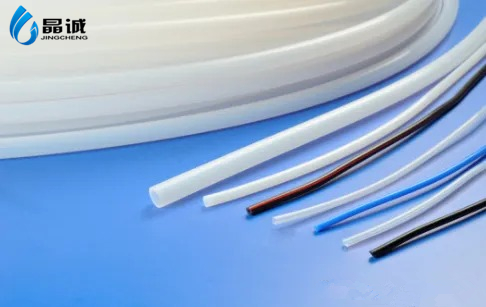
The specifications of PTFE liquid cooling tubes can be customized according to customer requirements and application environments. Common specification parameters mainly include: > Inner diameter * outer diameter * length
4*6 *L500, 4*6 *L150; ·6*8*L500, 6*8* L150; 8*10* L500, 8*10*L150; ·10* 12* L500 10* 12* L150 ·12* 14* L500 12* 14* L150 ·12* 15* L500 12* 15* L150 Other specifications can be customized according to requirements
Color: milky white, black, semi-transparent, transparent, etc. > Wall thickness: · Wall thickness directly affects the mechanical strength and pressure resistance of the pipe material. It is usually between 0.5mm and 3mm, with the specific value depending on the actual pressure requirements of the application and the structural stability requirements. The standard length of the liquid cooling pipe can be 100mm, 130mm, 220mm, 330mm, 480mm, 500mm, 1800mm, etc. The length can also be customized according to the actual layout requirements. In addition, from the perspective of later maintenance, PTFE liquid-cooled tubes, due to their high-temperature resistance, chemical stability, smooth surface and high durability, significantly reduce maintenance frequency and costs, simplify the cleaning process, lower the risk of leakage and enhance system reliability. These advantages make PTFE liquid cooling tubes an ideal choice for reducing maintenance burdens and enhancing system stability in data center liquid cooling systems.
END
Contact info:
eva@shenzhenjingcheng.com
Whatsapp +8613302625821
